Color identifier · iPhone & iPad · No subscription
Aim your camera at a shirt, a wire, a paint chip or a flower, and Hue tells you what color it is in plain words: “Juniper”, not just “some kind of green”. It can say the name out loud too. Built for people with color blindness, and handy for anyone who has ever asked “what color is that?”

Why names matter
About 1 in 12 men and 1 in 200 women see color differently. Pick a type of color vision below to see how these six colors can blur together, then read the names: those stay clear for everyone. That is what Hue gives you.
Showing typical color vision.
Point, lock, copy
The crosshair reads the color under it live, with the name in large type and the hex code and RGB values underneath. Tap the screen to lock the reading so your hand can move.
One tap on Copy Hex puts the code on the clipboard, ready for Figma, CSS or a paint-store chat. Rather keep the screen clean? Hide the hex and RGB lines in Settings.
Hear it
Hue says the color name out loud, so you don't even need to read the screen. Turn on auto-speak and it announces each new color as you sweep the camera across a room.
With VoiceOver on, color names are announced automatically, with a short pause so the voice doesn't trip over itself while you scan.
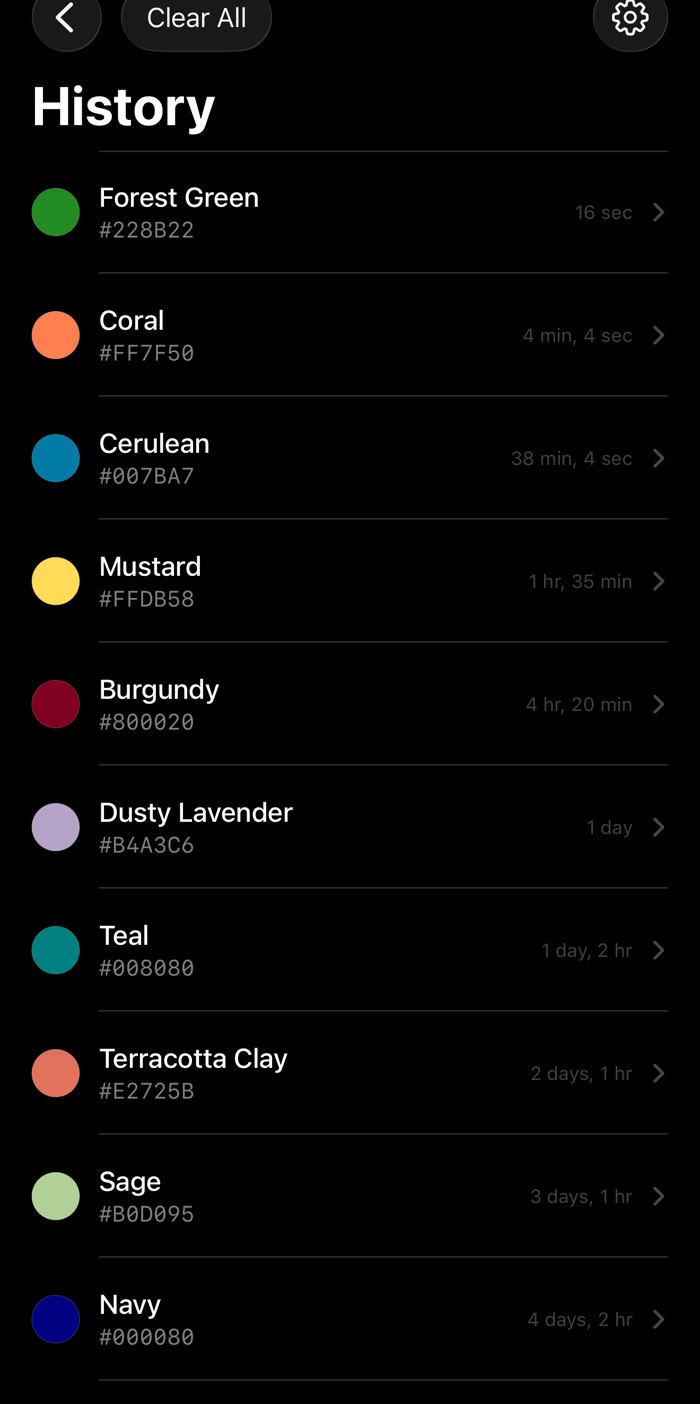
History
Hue keeps your last 100 colors with the name, hex code and when you found it. Open one to see it large, check its RGB values and category, or copy the hex again later.
Matching a paint at home with a fabric in the shop is a scroll away.
Flashlight
Colors drift in dim light. The built-in flashlight button lights up what you're pointing at, so the reading stays honest under a desk, in a cupboard or behind a TV.
Accessibility first
Hue was designed around color blindness and low vision from the first line of code, not patched in afterwards.
Hue never takes a photo, never uploads anything and makes no network connections at all. There are no analytics and no account. Your color history lives only on your device. The App Store label says it plainly: Data Not Collected.
Yes. Hue turns a color into words you can read or hear, so you don't have to tell shades apart yourself. It works the same whether you have protanopia, deuteranopia, tritanopia or another kind of color vision deficiency.
Hue compares what the camera sees against 600 named colors using CIELAB color distance, which tracks how people perceive color. Lighting still matters: warm bulbs, shadows and colored light all shift what a camera sees. For the best reading, use even daylight or the built-in flashlight.
Use Hue as a helper, not as the final word. For anything safety-critical, like electrical wiring or medication, confirm with printed markings, a tester or another person.
No. Hue reads the live camera image on your device and never saves or sends it. It works fully offline.
No. $2.99 once gets everything, including future updates. No ads and no account.
An iPhone or iPad with iOS 17 or later. Buy it once and it's yours on every device signed in with your Apple Account.
Hue — Color Identifier. $2.99, once.