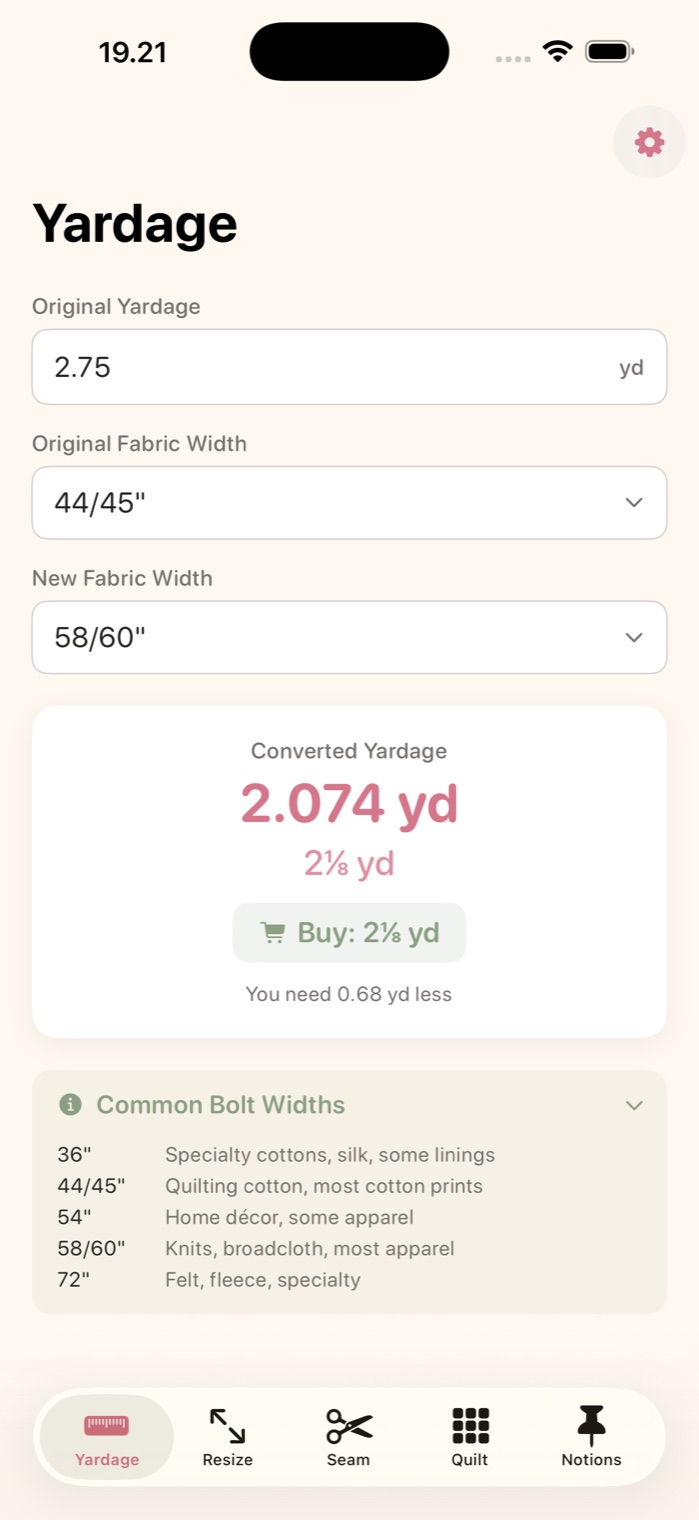
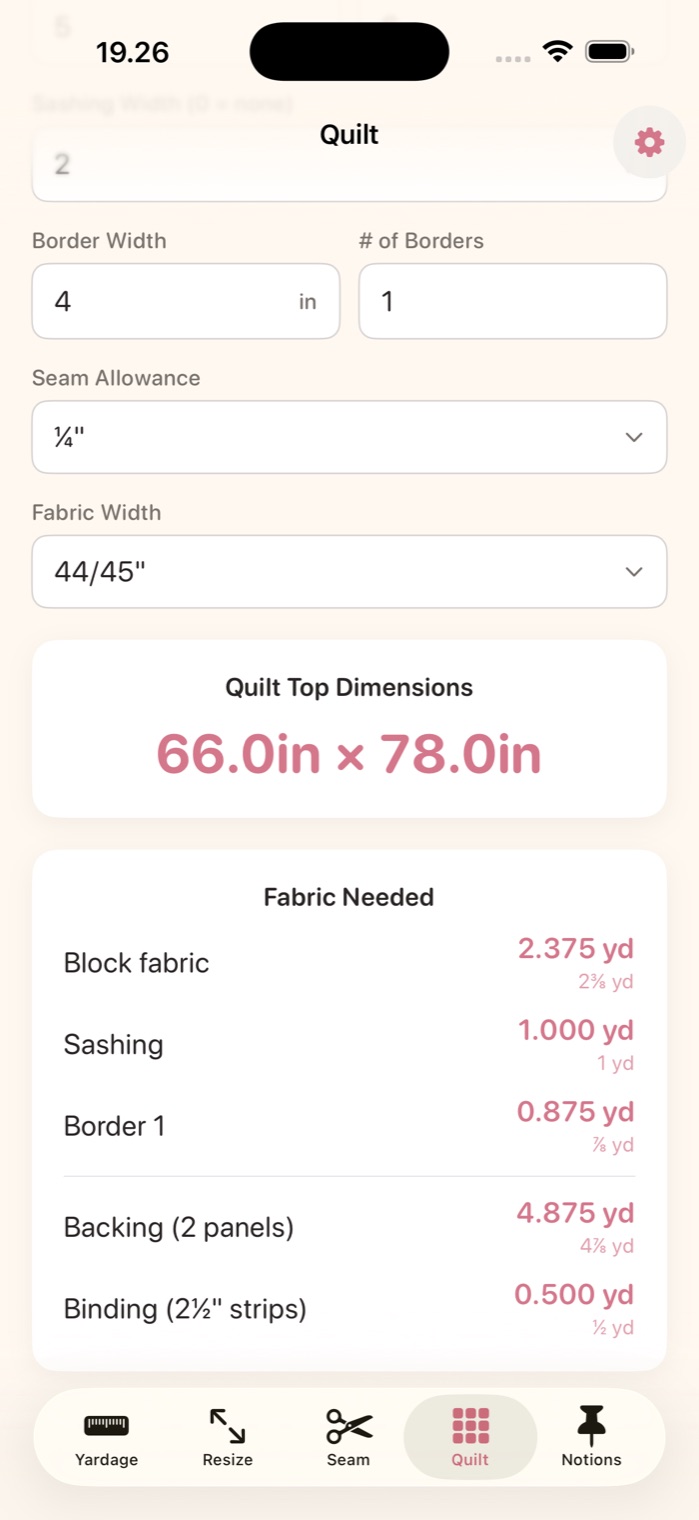
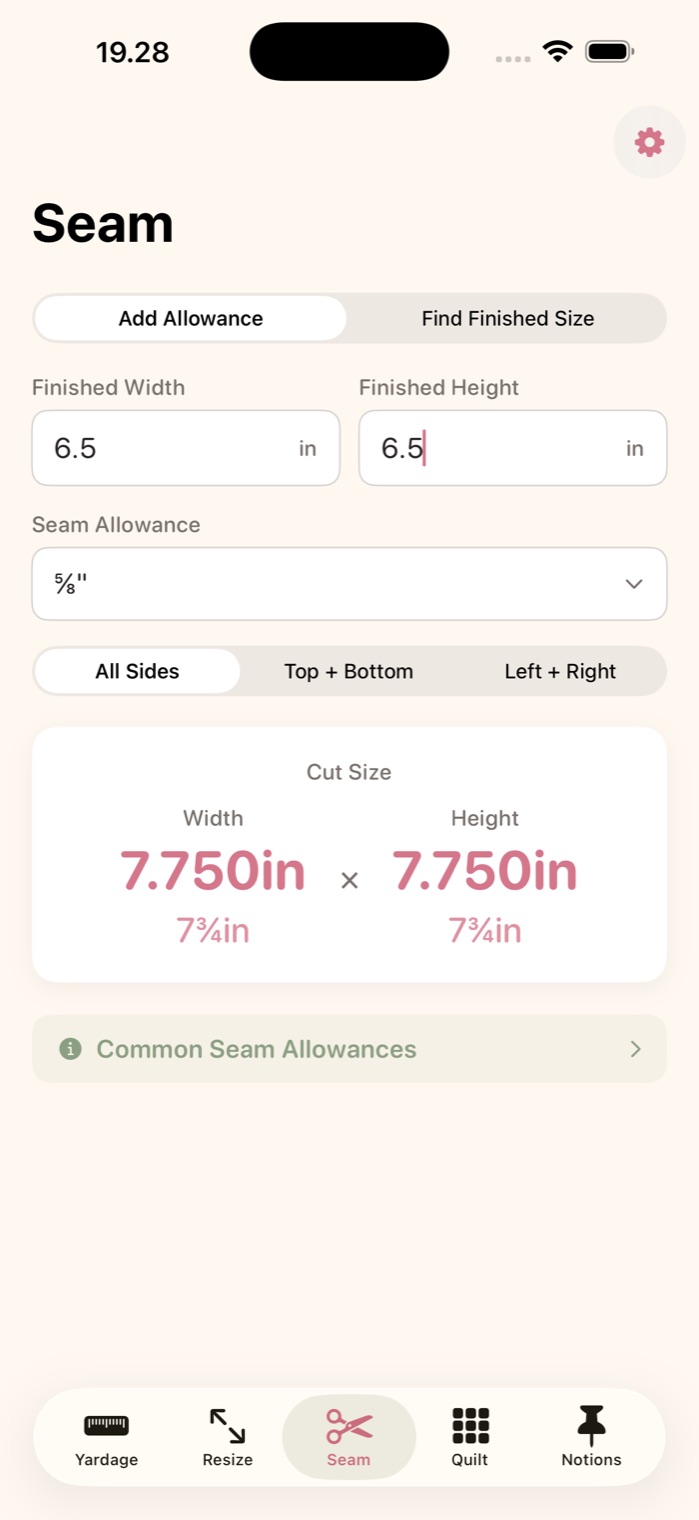
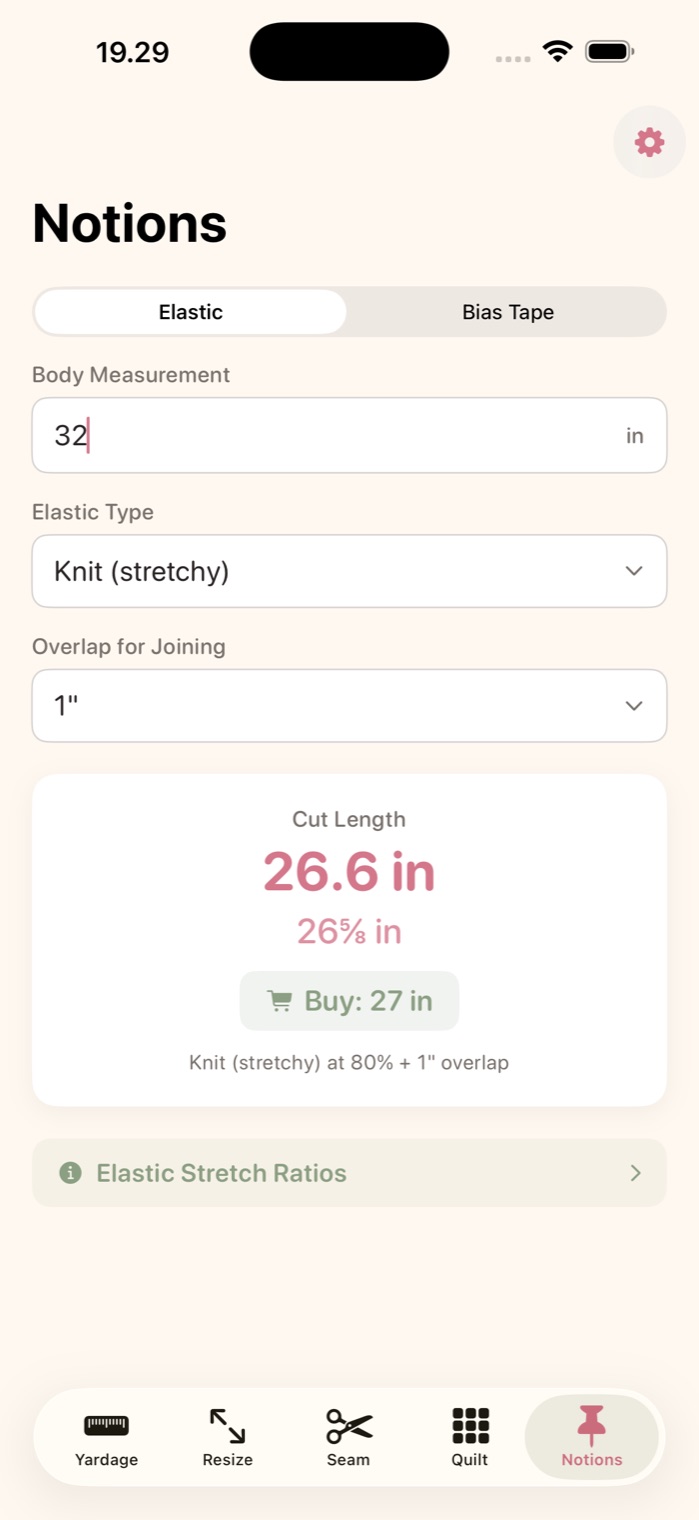
Found the perfect fabric, but it's 60″ wide and your pattern says 45″? SewCalc converts the yardage, sizes the quilt, adds the seam allowance and cuts the elastic — and answers in the fractions on your tape measure. No account, no ads, and it works in a craft room with no signal.

Yardage, patterns, seams, quilts, elastic and bias tape, in one breath. Turn your sound on.
General unit converters don't know what a bolt width is. SewCalc speaks sewing: yards in eighths, seams in fractions of an inch, quilts in blocks and borders.

The pattern asks for yardage at one width, but the fabric you love comes in another. Enter both and SewCalc converts it, then rounds up to the nearest ⅛ yard — the way the cutting counter sells it. Rounding down is how you end up a sleeve short.
A bolt-width reference is built in: 36″ silks, 44/45″ quilting cotton, 54″ home décor, 58/60″ apparel, 72″ felt and fleece.
Enter the block size, blocks across and down, sashing, borders and seam allowance. SewCalc gives you the finished quilt top, then the fabric for blocks, sashing, each border, pieced backing and binding strips — a shopping list for the quilt shop.


Add ¼″ for piecing, ⅝″ for garments, 1″ for fitting room — on all sides, top and bottom, or left and right. Switch to Find Finished Size to work backwards from a piece you've already cut.
Pick woven, knit or braided elastic and SewCalc applies the right stretch ratio plus your joining overlap. For bias tape, enter the total length you need and it tells you the fabric square and yardage to cut it from — before you start cutting strips.


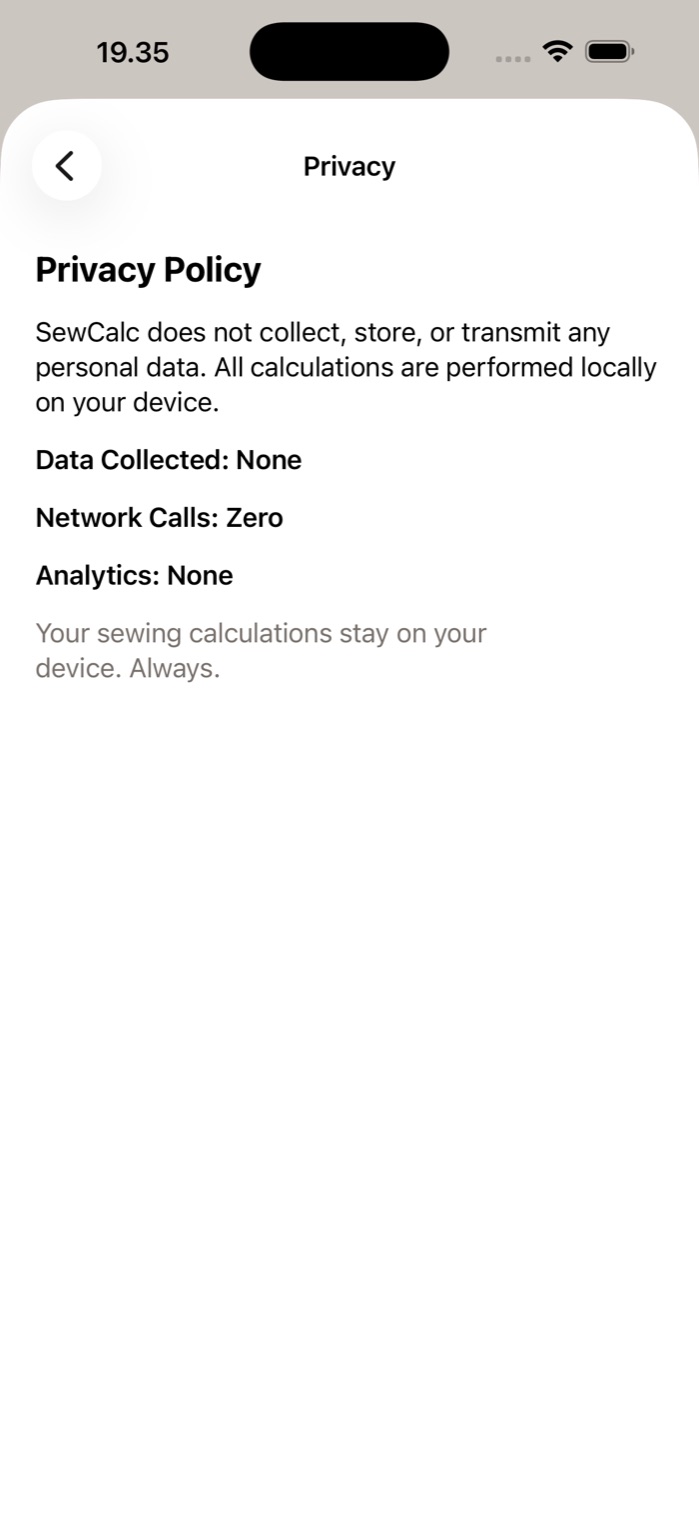
Sewing rooms are in basements and spare bedrooms, not next to the router. SewCalc makes zero network calls — every calculation happens on your device, and the App Store privacy label reads "Data Not Collected."
You just spent more than this on a spool of thread and a seam ripper. SewCalc costs the same, forever.